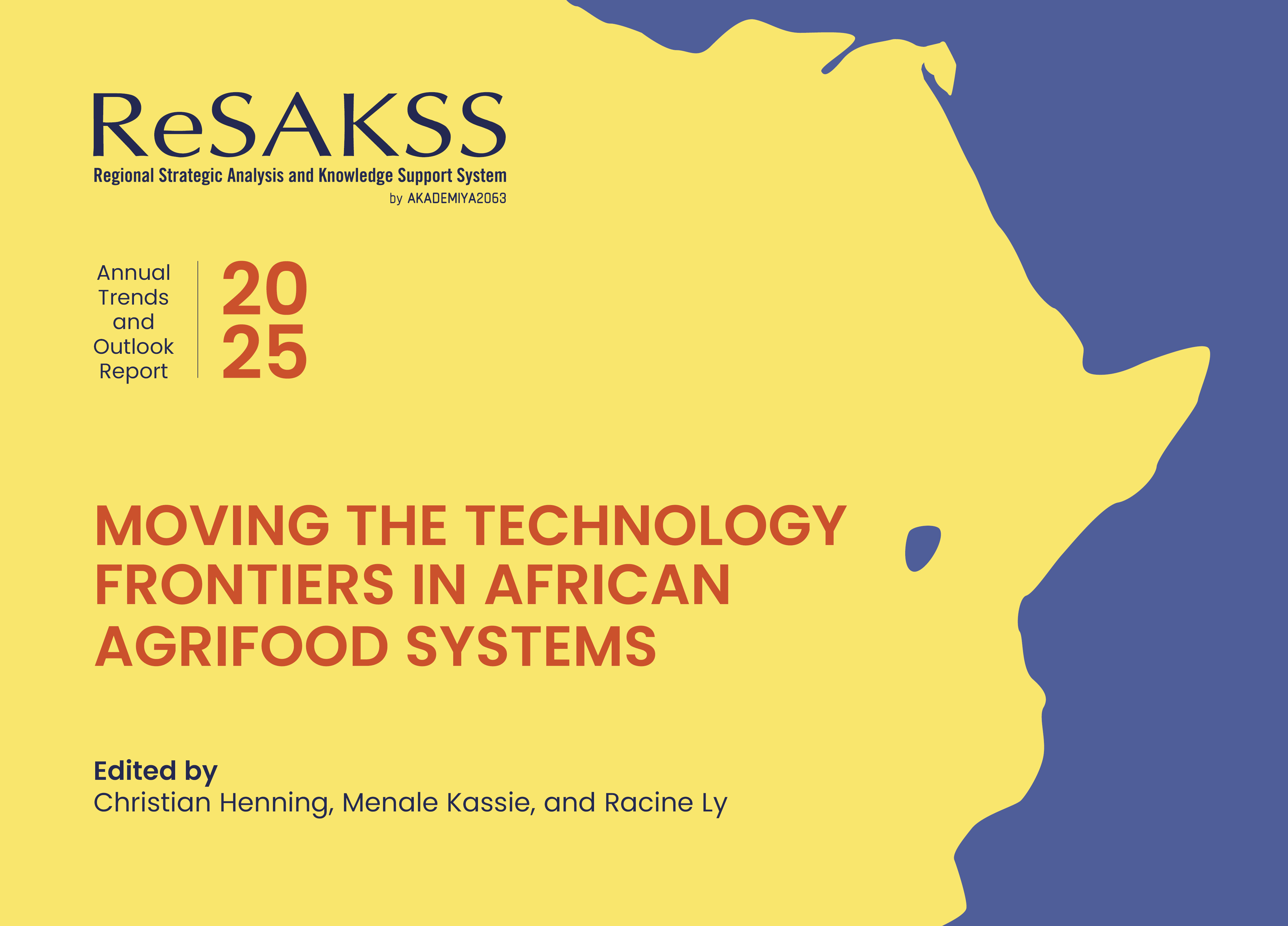
Sunday Odjo, Fousseini Traore, and Chahir Zaki, eds.
SERIES NAME
Africa Agriculture Trade Monitor
YEAR
2025
ABSTRACT
Food security in Africa is facing headwinds, driven by the compounding effects of climate shocks such as the 2023-2024 El Niño event, global conflicts, including the ongoing Russia-Ukraine war, and the aftereffects of the COVID-19 pandemic. As noted in the 2024 edition of the Africa Agriculture Trade Monitor (AATM), trade and trade policies, including tariffs, non-tariff measures, and trade agreements, can affect food security outcomes through their impacts on food availability, accessibility, stability, and utilization. This year’s AATM report examines how recent trends and patterns in Africa’s agricultural trade directly affect food security.
The 2025 AATM examines recent trends in Africa’s global and regional trade. With its updated statistics and data, the AATM serves as a comprehensive tool for monitoring Africa’s participation in global trade and the progress made in intra-African trade and regional integration. This 8th edition focuses on the trade-food security nexus, examining the continent’s high dependency on world markets for key staples, as well as the potential of regional trade and the related bottlenecks. The report also provides a detailed analysis of the rice value chain, a key commodity that contributes to food security but faces significant challenges. This publication also features an analysis of the fertilizer sector’s role as a key input in agricultural production and its links with food security. Given the debate over trade integration in Africa, the report examines whether existing regional trade agreements support or hinder deeper continental integration and what can be expected from the African Continental Free Trade Area (AfCFTA).
Despite several external shocks, intra-African agricultural trade tripled between 2003 and 2023. However, Africa remains heavily dependent on food imports from the rest of the world. Increasing intra-African trade can be a coping strategy for global crises and supply chain disruptions. Policies that prioritize regional self-sufficiency should be pursued more actively, particularly within the framework of the AfCFTA. Coordinated agrifood trade reforms and targeted investments are needed to fully benefit from an African single market and improve food security.